Teardown
BÉIS Marketing Strategy Teardown: $210M Acquisition | STUDIO UNA
Studio UNA analyses the growth playbook behind BÉIS's $210M valuation. From car-wash pop-ups to billboard campaigns featuring negative TikTok comments, here is our deep strategic teardown of how community, content, and experiential marketing drove Samsonite's 2026 acquisition.
Most people don't have an emotional relationship with their luggage. You check it, drag it, and forget it. At Studio UNA, we’re obsessed with the rare brands that take a low-interest utility product and turn it into a cultural movement. When Shay Mitchell launched BÉIS in 2018, she didn't just put her name on a suitcase—she built a content engine. Here is our strategic teardown of how community-led product development and experiential activations built a $210M travel empire.
Context Over Endorsement: The Founder’s Unfair Advantage
In standard celebrity marketing, the playbook is predictable: An actor or influencer licenses their name to an OEM manufacturer, shoots a glossy ad campaign, and relies on paid social ads to convert passive followers into one-time buyers. Most of these ventures fail because there is an inherent disconnect between the creator's online persona and the utility of the product they are pushing.
BÉIS bypassed this friction by anchoring its launch in a pre-existing context. Long before BÉIS produced its first SKU, Shay Mitchell spent years publishing #Shaycation—a travel vlogging series on YouTube that documented her global itineraries, packing routines, airport outfits, and real-time travel logistics.
The Unfair Advantage
- Contextual Authority: Mitchell’s audience already viewed her as a seasoned traveller who understood the real-world chaos of airports, packing space, and carry-on limitations.
- Organic Product-Market Fit: When BÉIS debuted in October 2018 with seven core items, Mitchell wasn't introducing a foreign concept; she was offering a tangible solution to a lifestyle her audience had watched her live for years.
- Accessible Positioning: Rather than launching an ultra-luxury luggage line priced out of reach for her core demographic, BÉIS launched in the entry-to-mid tier direct-to-consumer (DTC) space. Aesthetics were premium, but price points remained accessible.
From Studio UNA’s strategic vantage point, Mitchell didn't monetise her follower count; she monetised her existing utility content. The audience didn't feel sold to because the product line felt like a natural extension of her personal brand ecosystem.
Designing the Product as a Media Channel
Traditional luggage marketing focuses heavily on technical specifications: ballistic nylon, aircraft-grade aluminium handles, TSA-approved locks, and wheel durability. While these features matter, they rarely spark viral conversations on social media. BÉIS realised early on that modern consumer products must function as native media assets.
The brand’s breakout hit, The Weekender, was originally sketched on a paper cocktail napkin. It was engineered specifically to solve daily travel annoyances while looking visually striking on a camera feed.
Product Architecture → Visual Content Hook → Organic Distribution → Community Conversion
Visual-First Functionality
-
The Bottom Shoe Compartment: Solved the problem of dirty footwear touching clean clothing, but more importantly, created a distinct side-zip movement that became a staple format in packing tutorials across TikTok and Instagram.
-
The Built-In Trolley Sleeve: Provided structural stability on top of rolling luggage while offering an ideal visual setup for "airport aesthetic" outfit checks.
-
Organised Interior Hardware: Key fobs, padded laptop sleeves, and dedicated passport slots were framed not merely as organisational tools, but as an aspirational lifestyle upgrade—transforming chaotic packing into a clean, satisfying visual routine.
BÉIS turned functionality into social proof. By making the product visually distinctive in motion, every customer pulling a Weekender through an airport terminal became an unpaid channel marketer for the brand.
Viral Experiential Campaigns: Offline Touchpoints as Online Fuel
While digitally native brands often over-index on paid digital media, BÉIS built exponential momentum through high-concept experiential activations. At Studio UNA, we analyse experiential campaigns through a single lens: Does the offline experience generate native online content? BÉIS answered this with immersive pop-ups that disrupted traditional retail formats.
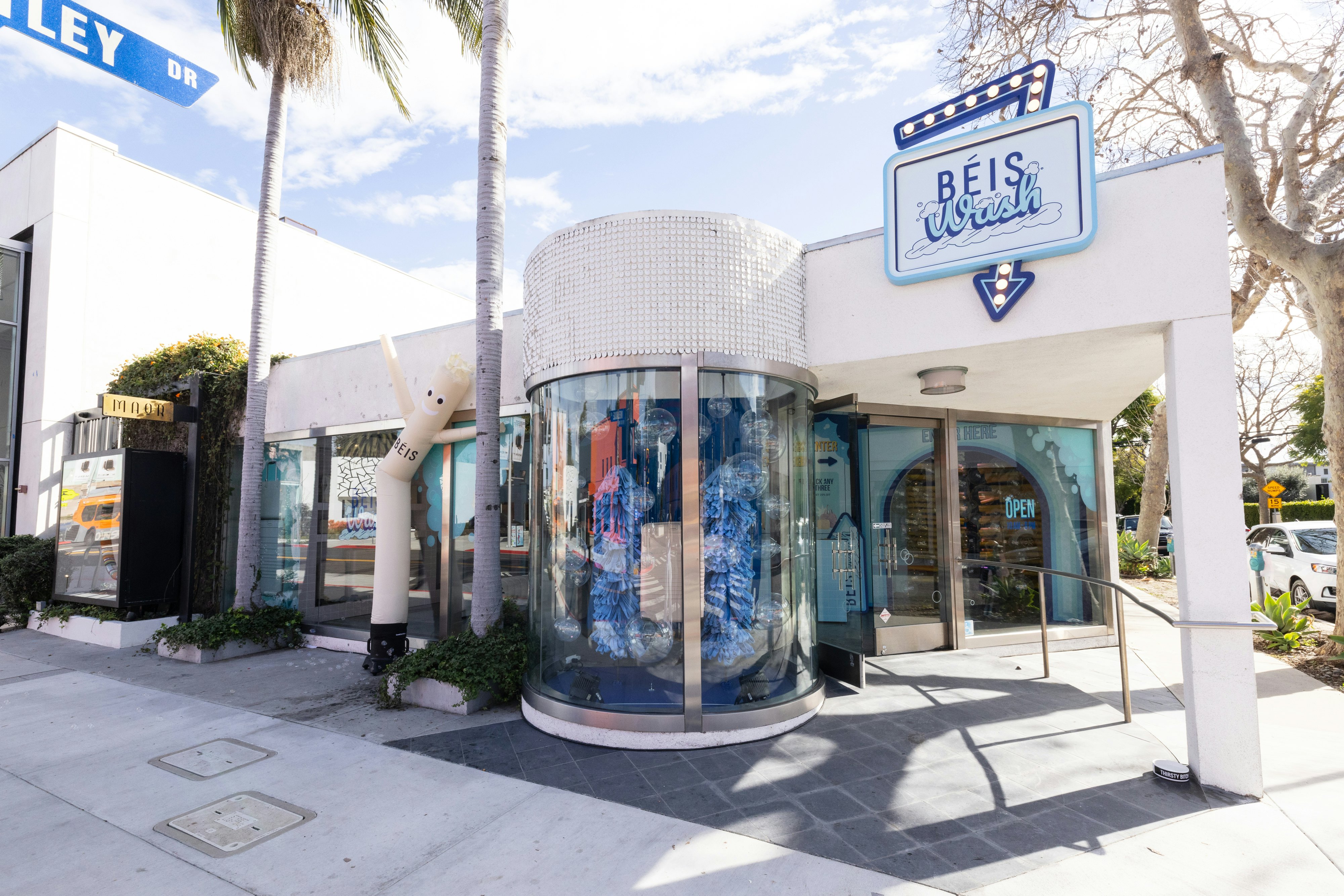
Activation 1: The BÉIS Wash (Los Angeles)
To launch its collection of clear, water-resistant travel bags and accessories, BÉIS transformed a functioning Los Angeles car wash into an interactive brand installation.
-
The Strategic Objective: Demonstrate product durability and water-resistance while positioning utility travel accessories as high-fashion lifestyle items.
-
Why They Used Experiential Marketing: Static studio photos of plastic bags fail to capture consumer attention. A full-scale, neon-lit car wash built specifically for creator walk-throughs made product testing inherently shareable.
-
The Execution: Visitors drove or walked through specialised tunnels featuring foam installations, branded pressure washers, and custom water-testing stations. Influencers received clear bags packed with survival kits and recorded themselves subjecting the products to water blasts inside the installation.
-
Viral Impact & Results: The event dominated creator feeds, generating tens of millions of organic social impressions in 48 hours. The clear collection sold out rapidly after launch, proving that physical stunt marketing could drive immediate digital conversions.
Activation 2: The BÉIS Hotel & BÉIS Motel
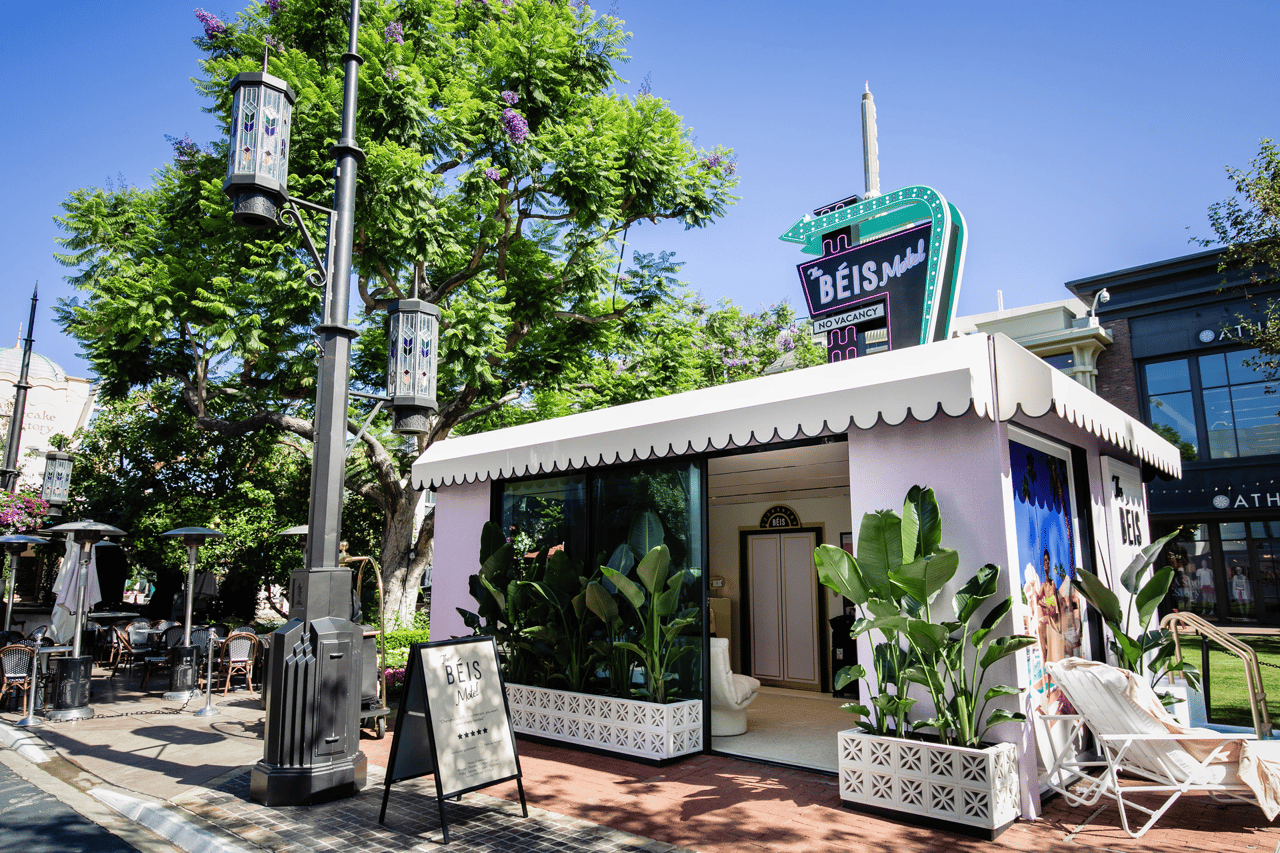
To celebrate brand milestones and seasonal drops, BÉIS created pop-up boutique hotel spaces in major metropolitan markets, complete with branded check-in desks, custom keycards, baggage claim conveyor belts, and themed photo-ops.
-
The Strategic Objective: Immerse the consumer in the complete BÉIS travel universe, bridging the gap between digital interaction and physical brand immersion.
-
Why It Worked: BÉIS took the most frustrating elements of travel—checking bags, waiting at baggage claim, hotel check-ins—and gamified them into photogenic, playful consumer touchpoints. Attendees didn't feel like they were entering a retail store; they felt like they were stepping directly into a brand commercial.
The TikTok R&D Playbook: Weaponising Customer Criticism
In 2024, BÉIS faced a critical challenge familiar to fast-growing consumer brands: its signature hero product, The Weekender, began receiving concentrated criticism on TikTok. Users voiced frustration that the bag was too heavy when fully loaded, the shoulder strap dug in during long walks through terminals, and the rigid top opening made searching for small items difficult.
While conventional corporate PR attempts to suppress, ignore, or offset negative reviews with generic statement releases, BÉIS integrated the criticism directly into its campaign strategy and product development pipeline.
The Campaign Breakdown: The Weekender Redesign
- The Objective: Redesign the brand’s core bestseller to resolve physical design flaws without diluting brand recognition or losing customer trust.
- The Campaign Strategy: Instead of quietly releasing an updated model, BÉIS turned its customer feedback into the centre piece of an aggressive, transparent marketing push. They launched a multi-channel campaign highlighting real negative TikTok comments across digital ads, social video assets, and physical billboards.
- The Execution: Billboards were printed featuring screenshots of genuine user complaints—such as "Your bag hurt my shoulder" or "It's too heavy"—followed by the brand’s direct response: "We heard you. So we fixed it."


The brand then launched the redesigned Weekender, which featured lighter composite materials, extra-padded shoulder straps, an expanded wide-mouth opening, and a more flexible internal architecture.
- Why It Went Viral:
- Radical Vulnerability: Consumers are accustomed to brands defending their products or hiding negative commentary. By printing criticism on giant billboards, BÉIS weaponised authenticity.
- Community Ownership: The audience felt directly responsible for the new product design. Customers realised that posting a critique on TikTok could alter actual product manufacturing decisions.
- R&D as Marketing: The product update was the campaign. The brand didn't need to invent a forced creative narrative; the process of listening, redesigning, and delivering created a compelling, transparent story.
The redesigned Weekender launch re-engaged critical creators, lowered product return rates, and established BÉIS as a brand that operates with an open feedback loop.
Strategic Pivot: From Airport Luggage to "Life in Motion"
When global travel halts occurred in 2020, travel and luggage brands faced existential revenue drops. BÉIS survived and expanded during this period by fundamentally redefining its category positioning.
Rather than defining itself strictly around airport travel, BÉIS expanded its brand architecture around the broader concept of "Life in Motion."
Old Positioning: Airport Travel (Occasional Event)
New Positioning: Life in Motion (Daily Routine)
-
- Work Commutes (Totes, Backpacks)
- Fitness & Wellness (Duffles, Gym Bags)
- Parenting (Diaper Bags, Stroller Caddy)
- Short Trips (Weekenders, Carry-Ons)
By expanding into daily carry-alls, gym bags, work totes, changing bags, and eventually men’s performance luggage, BÉIS decoupled its valuation from air travel frequency. The brand evolved into an all-day utility ecosystem for active consumers, drastically increasing its Customer Lifetime Value (LTV) and Repeat Purchase Rate.
BÉIS Campaign Strategic Teardown
|
Campaign / Activation |
Strategic Objective |
Target Audience |
Marketing Mechanism |
Strategic Outcome |
|
The BÉIS Wash Pop-Up |
Demonstrate water-resistance & durability for clear bag line. |
Local LA creators, Gen Z & Millennial consumers. |
Experiential car-wash pop-up, creator UGC, live product stress tests. |
Multi-million organic impressions; collection sold out within days. |
|
TikTok Comment Billboards |
Address product flaws in The Weekender & retain brand trust. |
Critical social media users, past buyers, travel community. |
Out-of-Home (OOH) billboards featuring real viral critiques & responses. |
Neutralised brand reputation risks, lowered return rates, and drove high-volume re-orders. |
|
"Life in Motion" Expansion |
Diversify revenue streams beyond airport travel during global travel pauses. |
Commuters, parents, gym-goers, everyday active lifestyle consumers. |
Category expansion into diaper bags, work totes, and daily accessories. |
Shielded company revenue during travel downturns and increased repeat purchase frequency. |
|
Men’s Performance Launch |
Capture male consumer segment without diluting female brand equity. |
Male business travellers, fitness enthusiasts, gender-neutral buyers. |
Performance-led visual campaigns emphasising neutral tones & technical durability. |
Successfully expanded total addressable market (TAM) beyond founder's original demographic. |
The $210 Million Exit: What Samsonite Is Actually Buying
In August 2026, global luggage giant Samsonite announced a definitive agreement to acquire an 85% majority stake in BÉIS for $178.5 million in cash, placing the total transaction value of the brand at approximately $210 million. Under the structure of the deal, Shay Mitchell retains a 15% equity stake, while CEO Adeela Hussain Johnson and the core executive team remain in control of daily operations. The acquisition is set to close in Q4 2026.
From a corporate strategy perspective, Samsonite is not purchasing manufacturing plants or supply chain patents. They are purchasing assets that traditional legacy luggage manufacturers cannot easily build internally:
-
Cultural Relevance Among Gen Z & Millennials: Samsonite dominates global retail distribution and legacy manufacturing, but historically struggles to capture younger, social-first buyers. BÉIS provides immediate, authentic access to a culturally engaged demographic.
-
A Proven Social-First Content Engine: BÉIS has mastered organic creator loops, viral experiential activations, and community-driven R&D. Samsonite can plug this content engine into its global distribution infrastructure across international markets.
-
High-Margin Ecosystem Expansion: With a broad SKU portfolio spanning travel hardware, everyday lifestyle bags, cosmetic cases, and kids' gear, BÉIS brings an architecture built for high repeat-purchase behaviour—far exceeding the traditional replacement cycle of standard hardshell suitcases.
The Studio UNA Playbook: 7 Lessons for Brand Builders
For brand strategists, founders, and marketers analysing the BÉIS playbook, several key operational takeaways emerge:
-
Context Trumps Endorsement: Do not launch a brand simply because you have an audience. Launch a brand where you already possess contextual authority and proven consumer context.
-
Design Products to Generate UGC: Build visible, physical features into your products that encourage users to demonstrate how they work on video feeds.
-
Turn Physical Events into Content Engines: Never host an offline activation solely for the people in the room. Design physical experiences where every corner doubles as an intuitive video set for digital distribution.
-
Treat Your Comment Section as R&D: Negative social feedback is not a public relations crisis; it is an unedited product brief. Listen, iterate, and document the improvement publicly.
-
Weaponise Radical Transparency: Admitting product flaws publicly and showcasing how you fixed them creates far more brand affinity than launching an ad claiming your product is perfect.
-
Position Around Mindsets, Not Single SKUs: Move your category definition away from restrictive product definitions ("luggage") toward broader lifestyle behaviours ("life in motion").
-
Maintain Brand Equity During Evolution: When updating products or expanding categories, preserve core brand assets (logo, visual identity, signature colour palettes). Evolution does not require erasing established visual equity.
The STUDIO UNA Take
The rise of BÉIS from a napkin sketch to a $210 million Samsonite acquisition illustrates how modern commerce operates. Success was not achieved purely through celebrity reach or massive ad budgets; it was achieved by building a tight feedback loop between founder context, product design, experiential marketing, and community feedback.
Founder Authority → Audience Trust → Content-Ready Product → Experiential Stunts → Community Feedback → Iterated Product
Shay Mitchell and her team did not simply sell luggage. They created a platform that allowed travellers to feel organised, stylish, and heard. As BÉIS enters its next chapter under the Samsonite umbrella, it remains a gold-standard case study in how DTC brands can build lasting, culture-defining equity out of low-interest utility categories.
Launching into a market you do not live in?
This is the engagement we run most often. Six weeks of strategy, six months of execution, then handover.