Beauty
Makeup Is Back, and It's Going Matte
The feed says the clean girl is over and chaos is in. We pulled Google search data for 40+ makeup terms in the UK and US to see what shoppers are actually doing—and the biggest surprise isn't chaos. It's matte.

What the search data says, and what beauty brands should actually do about it.
Since January, the beauty press has been busy calling time on the "clean girl" aesthetic. In her place, we're told, comes chaos: smudged liner, glitter, gems, clashing colour, makeup that looks lived in. The theory goes that in the AI era, imperfection reads as human. Approachable. Relatable. But is it actually true?
Scroll for five minutes and it's hard to argue. Maximalism is everywhere online. Who What Wear's 2026 forecast names "maximalist makeup" (bold, colourful and jewel-bedecked) as a defining look, championed by makeup artist Doniella Davy and celebrity personas like Zara Larsson, with Euphoria as a common reference point. BeautyMatter points to Chappell Roan and Doja Cat with MAC, chrome freckles and sculptural liner. On the SS26 runways, Alexander McQueen, Vivienne Westwood and Caroline Hu all sent out deliberately undone faces.
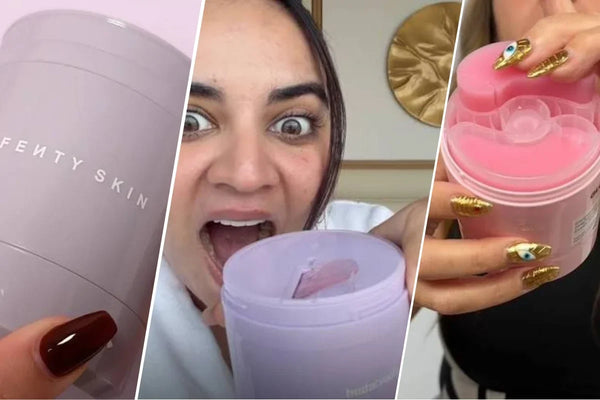
Yet walk down the streets of London, Paris or New York, and it's scarcely visible. Creator: Rowi Singh
Creator: Elise Couv
So we went looking for the gap between what's happening on our feed and what's actually landing in the shopping cart. We pulled nearly four years of Google search data for more than 40 makeup terms in the UK and US, from blush to "clean beauty", and compared this year with last. For us, the biggest surprise isn't chaos—it's matte makeup's big comeback.
What shoppers are actually searching for
Makeup is coming back, but not in the ways that the headlines suggest. In both the UK and the US, people are searching for colour cosmetics more than they were a year ago, while searches for base makeup categories like foundation and concealer have barely moved.

Blush leads, up 18% in the UK and 16% in the US. That's not news on its own, as blush has been climbing for years, and UK interest is two-thirds higher than it was in 2022. Lip liner tells a similar story: up 36% in the UK and 56% in the US compared with 2024, and Circana's sales data has it as the fastest-growing segment in US makeup this year.
What's more telling is what isn't moving. Concealer is up just 4% in both markets. Mascara is up 4–5%. Shoppers are adding colour, not coverage. This is a top-up, not a full face.
The matte turn
The real shift is in finish. After years of glass skin, lip oils and dewy everything, matte is growing faster than the categories it sits in.
Searches for matte foundation are up 36% in the UK and 33% in the US. Matte lipstick is up 23% and 21%, while searches for lipstick overall are up 8% in the UK and flat in the US. At the same time, the hero formats of the dewy era are falling: lip oil is down 15% in the UK and 22% in the US, tinted moisturiser is down 4% and 10%, and water-based foundation has dropped by around a third in both markets (37% in the UK, 32% in the US).

The trend forecasters are starting to say the same thing. Who What Wear's 2026 predictions include "melted matte lips" and "cloud skin", a soft-blur finish replacing the glazed look. Creator: Sarah Louwho

Creator: Malvika Sitlani
This matte isn't the flat, cakey matte of the mid-2010s. It's softer and blurred at the edges. But the direction is clear, and it's a shift the feed isn't shouting about—at least not just yet.
Has the clean girl peaked?
Probably. But she isn't going anywhere, not for now.
First, a note about our methodology. Longer search phrases have risen across the board since late 2025. Even neutral ones like "best mascara" and "how to apply foundation" are up a third in the UK and a fifth in the US. Single product words like "mascara" aren't. That looks like a change in how people search rather than in what they want. So we measured every phrase against that general rise.

On that basis, "no makeup makeup" is down in both markets, by 15% in the UK and 4% in the US. Searches for "skincare makeup" are up only modestly, 13% in the UK and 16% in the US. Skin tint is still growing, up 12–13%, but tinted moisturiser and lip oil, the products that defined the look, are falling.
So the clean girl isn't dead. Her look has become the default, and defaults stop growing. What's changing is what people add on top of it.
"Clean" now means what's inside
One word is moving fast, and it isn't "clean girl". It's "clean" on its own.
Even after allowing for the general rise in phrase searches, "clean beauty" is up 54% in the UK and 24% in the US. "Clean makeup" is up further still, and both stepped up from late 2025 in both markets. "Vegan makeup" is also rising, though from a small base.
Our read: the word is drifting away from a look and back towards what's in the product. Shoppers who want more colour on their face still want to know what's in the formulas.
Not every values term registers. "Cruelty-free makeup" and "water-free makeup" get too few searches to measure. Shoppers may care, but "clean" is the only word that they actually use when searching for products.
Two markets, two comebacks
The UK and US are not moving together.
In the UK, the comeback is broad. Eyeliner is up 23%, eyeshadow 17%, blush 18% and lipstick 8%. In the US, it's narrower. Blush, lip liner and matte formats are growing, while eyeliner and eyeshadow are up just 4% and lipstick remains flat.
"Eyeliner searches are up 23% in the UK, and just 4% in the US."
The two markets do agree on one thing. Neither is searching for chaos. "Messy makeup", "smudged eyeliner" and "blush draping" get too few searches to measure in either market. Red lipstick is down 5% in the UK and 17% in the US. The one exception is "dramatic makeup" in the US, up 29% above the general rise, but UK searches for it are too low to measure.
What this means for brands
Our Instagram algorithm says chaos, but the data says colour, matte and "clean"—arriving slowly and differently in each market. That gap is the point. Trends always look louder online than they are in people's baskets, and brands that react to the feed end up chasing noise.
Here's how we'd approach it.
1. Don't overhaul anything because the market says so. A new trend isn't a reason to rethink your portfolio, your branding or your approach. Most brands are better served by doing what they do well, more clearly.
2. Start with your own data. Before acting on any trend, check whether it's showing up in your sell-through. Are shades, finishes or formats shifting within your range? Is site search or Search Console picking up new terms? Your customers will tell you before the market does.
3. Look for staying power, not noise. Lip liner has climbed for two years running, in search and in sales. Peptide lip products doubled this year, from a very small base. They're different bets. Look for signals that show up in more than one place (search, sales and your own social comments), not just on the feed alone.
4. Audit for growth, but only where it fits. Trends are a useful prompt to look for new opportunities. The question isn't "is this trending?" but "does this fit naturally into our world, and—importantly—will it last?"
5. Reframe before you rebuild. It's far easier to change the story around a product than to make a new one. A long-wear lipstick can become your melted matte lip. A tinted balm can become part of a "cleaner" routine. Content is where you can play with trending moments, but always on brand.
6. Use the words your shoppers use. If people are searching "matte" or "clean", and it's true of your product, say so in product titles, product pages, SEO and Shopping feeds. It's the cheapest and fastest way to respond.
7. Test before you commit. Try a matte-led ad angle or a creator brief before changing the range. Click-through, saves and conversion will tell you whether the interest is real for your customer.
8. Treat each market on its own terms. The UK comeback is broad and the US one is narrow. A single global trend playbook will be wrong somewhere.
9. Let creators carry the trend moments. Creators can try the maximalist or trending look with your products, so your brand can capitalise on the moment without changing its identity.
At STUDIO UNA, this is the work we do with beauty, fashion and aesthetics brands: reading search, social and sales signals together, and turning them into launch and content strategy that fits the brand. If you'd like the full UK and US data behind this piece, get in touch.
How we did it
- Source: Google Trends, UK and US, pulled 1 October 2026. Trends gives a 0–100 index for each term, not search counts, so every figure compares a term with itself.
- Comparison: January–March and July–September 2026 against the same months of 2025. We left out April–June because a US data spike hit every term at once, including skincare.
- Phrases: we measured phrase terms against three neutral control phrases, because long searches rose across the board from late 2025.
- Gaps: terms with too few searches to measure are named in the piece, not dropped.
Sources
Want this run over your own brand?
We work with beauty, fashion and aesthetics brands across the UK, USA, Spain, France and the UAE.